Senzu
A compact instrument you pick up and play.
- Role
- Product design, physical interaction and interface design, prototyping (developed jointly)
- Team
- With Viktor Strömberg
- Year
- 2024
- Context
- Duo project
- Outcome
- A working prototype with its own sounds, keys and drum surfaces.
- Tools
- Arduino
- 3D printing
- Physical prototyping
Around the instrument
- 01Six playing keysset into the rim, three for each hand
- 02A key, close upthe blue body under the ribbed ring
- 03Two displaysthe round touch display and the small side display
- 04Slide switchselects the mode
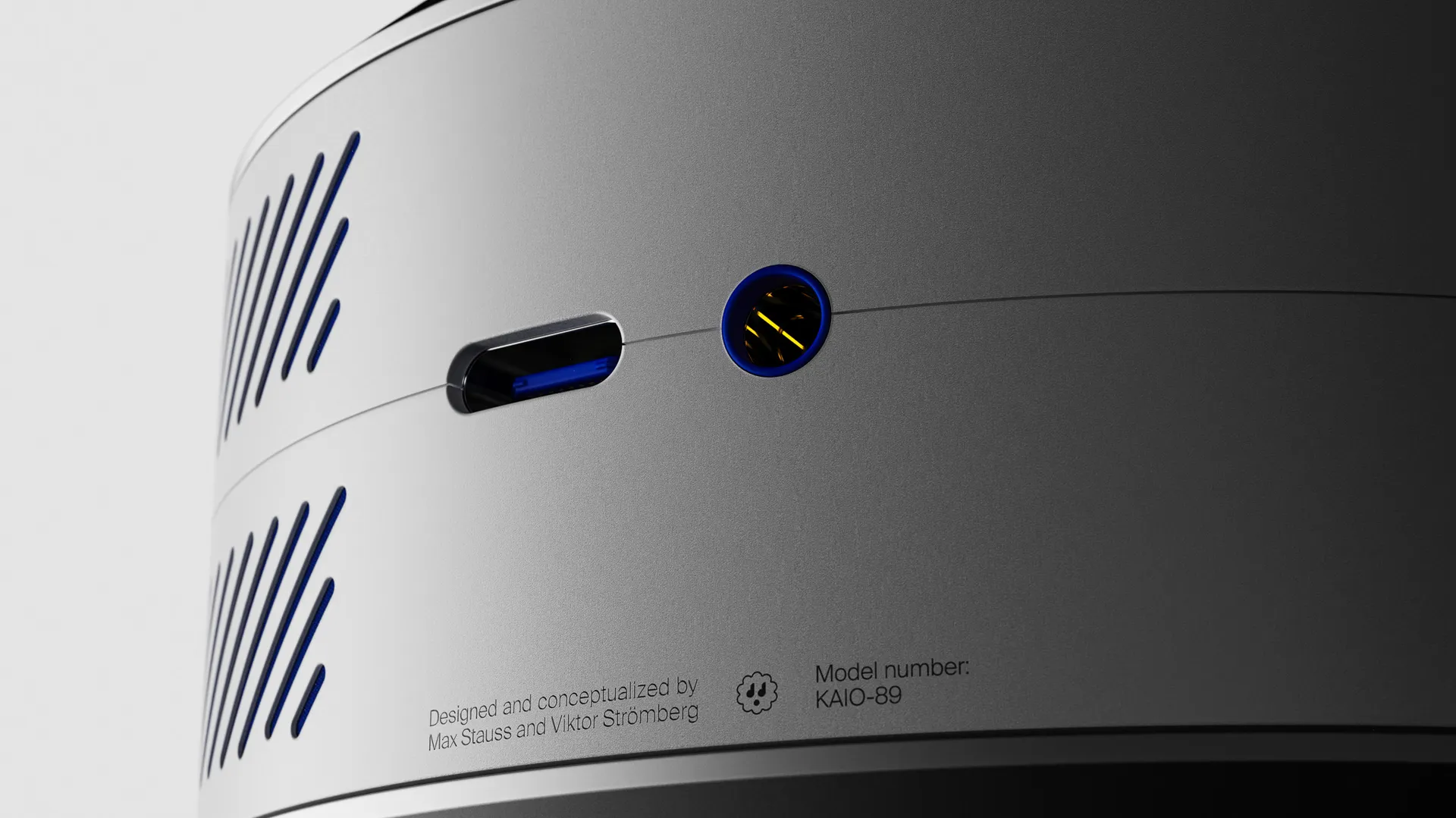
- 05PortsUSB-C and a 3.5 mm jack between the speaker slots
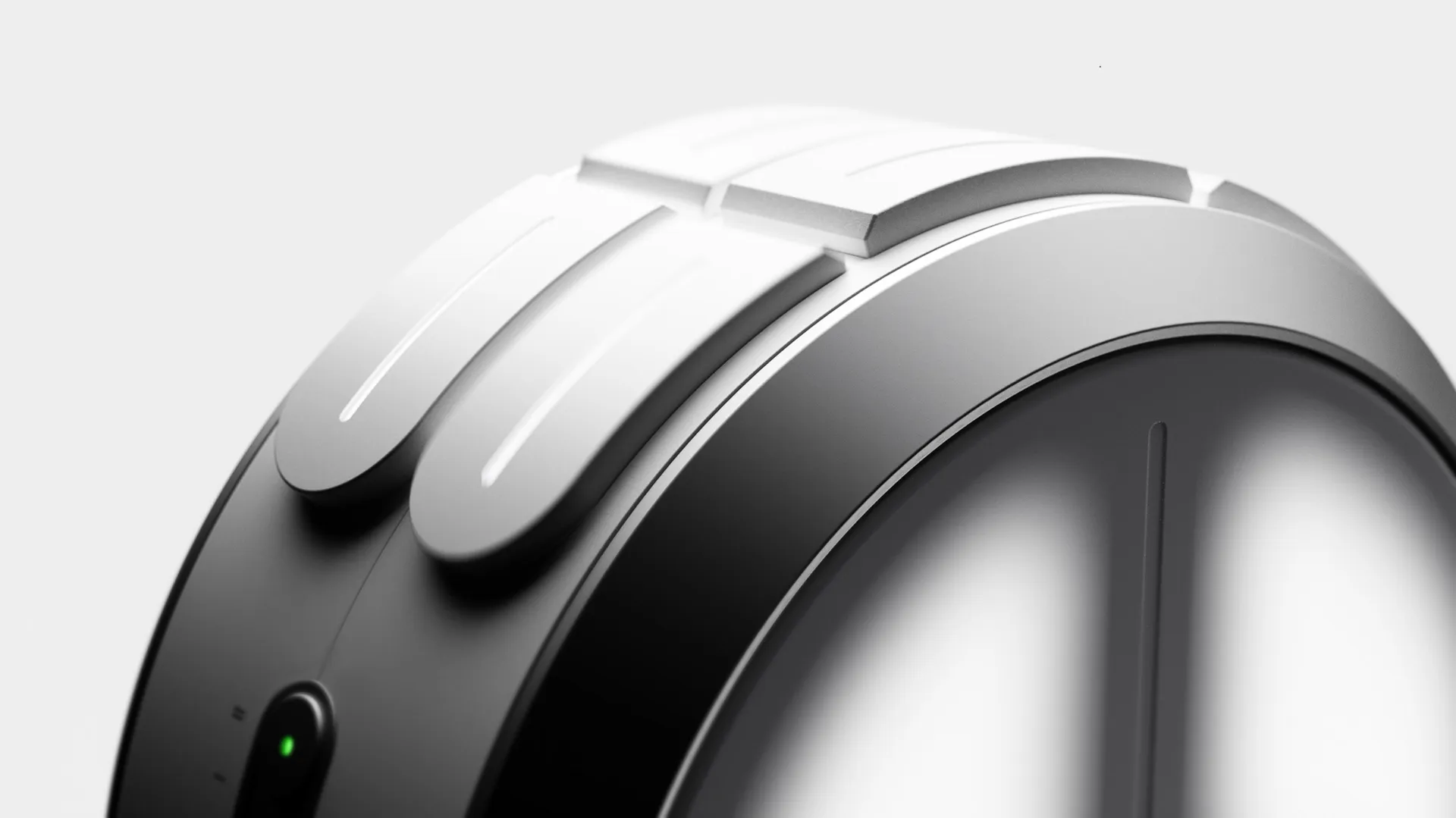
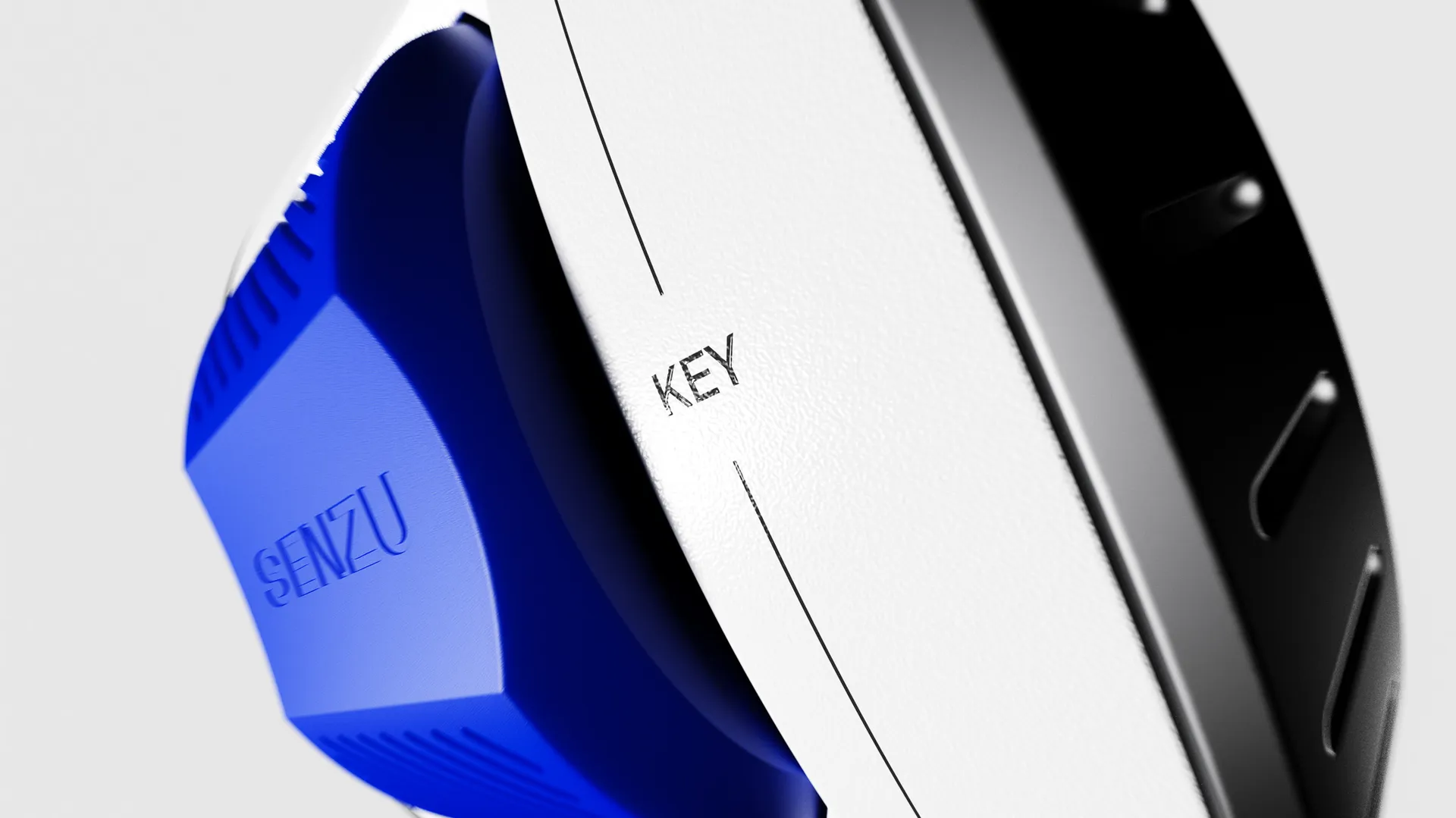
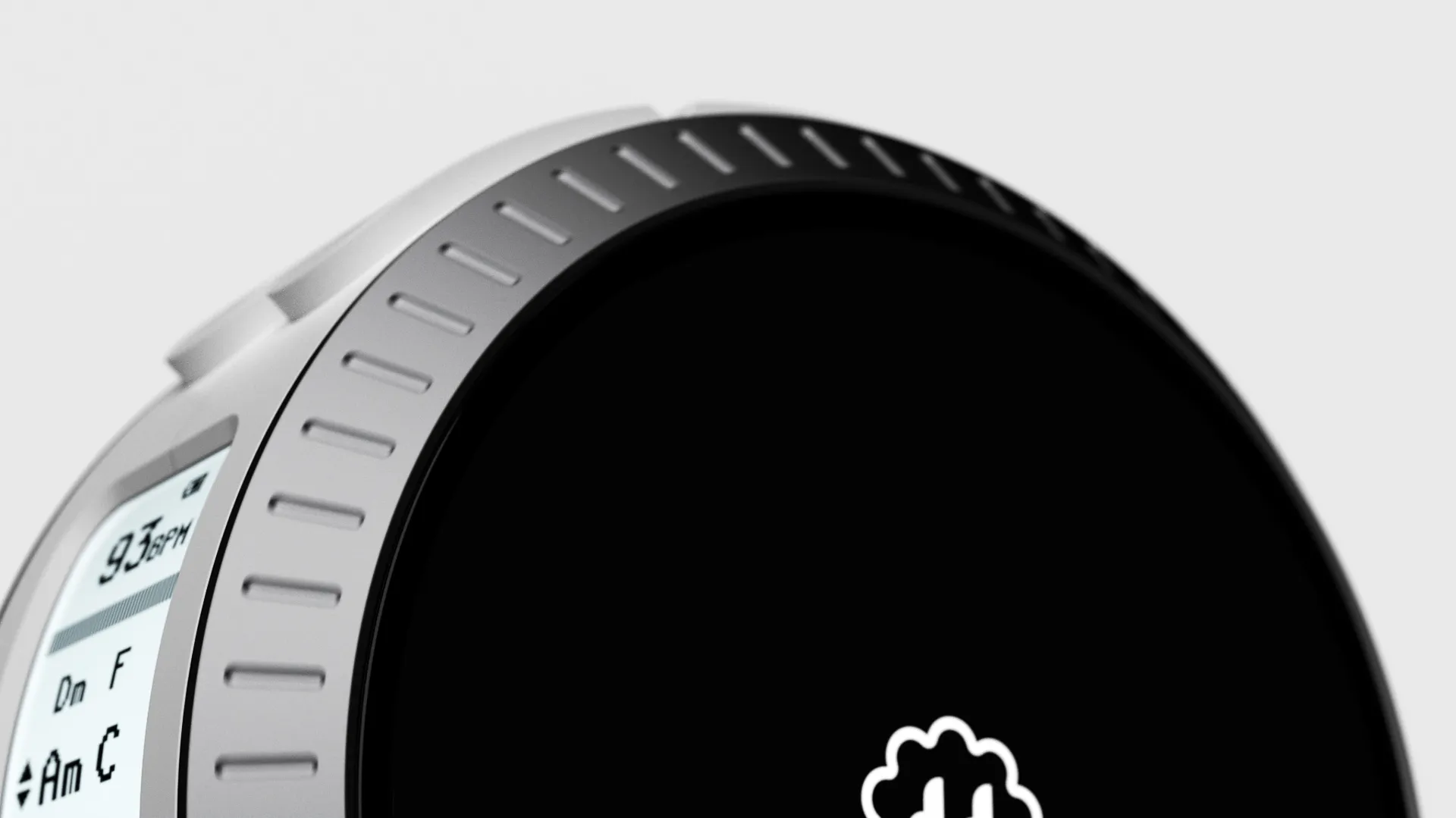
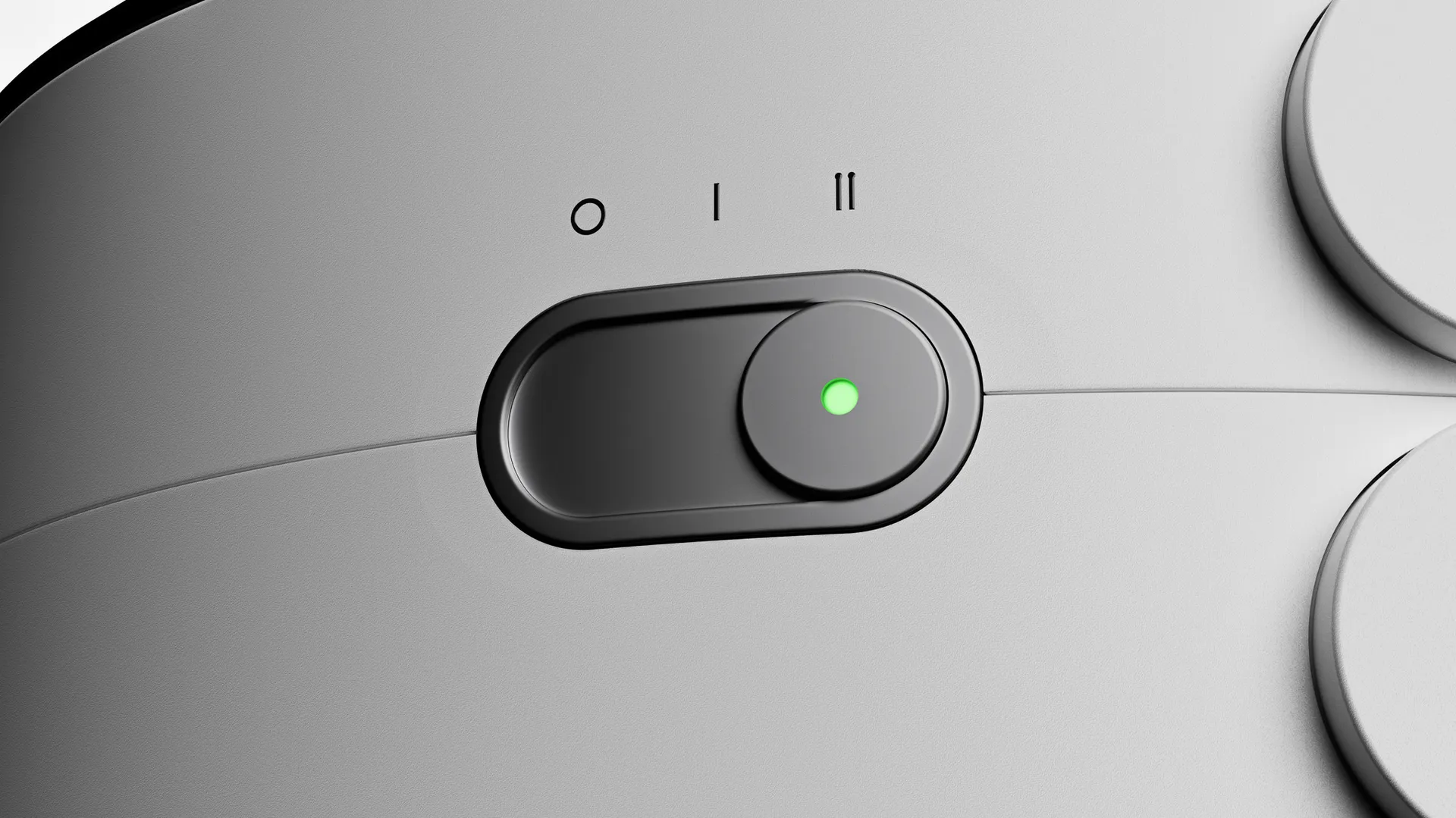
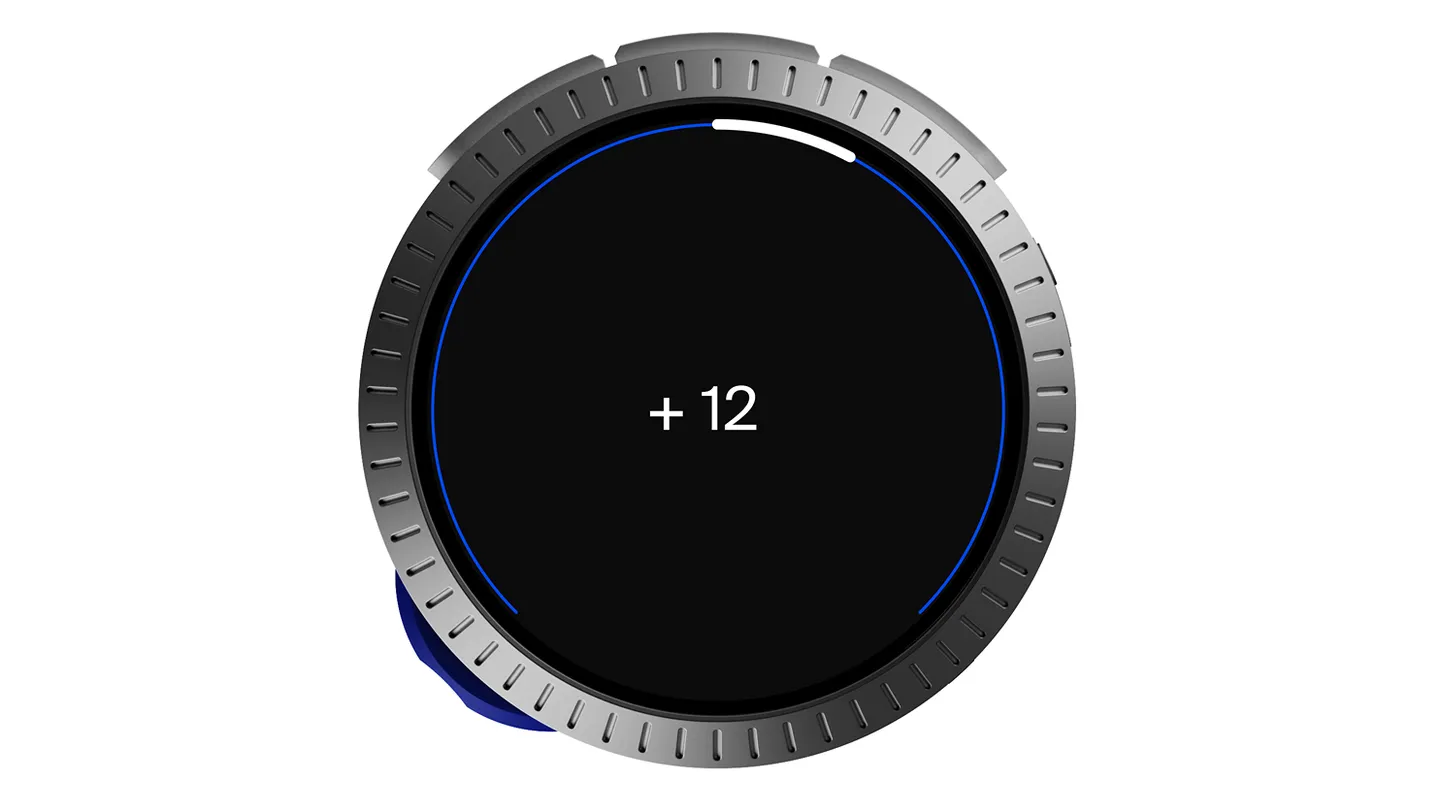
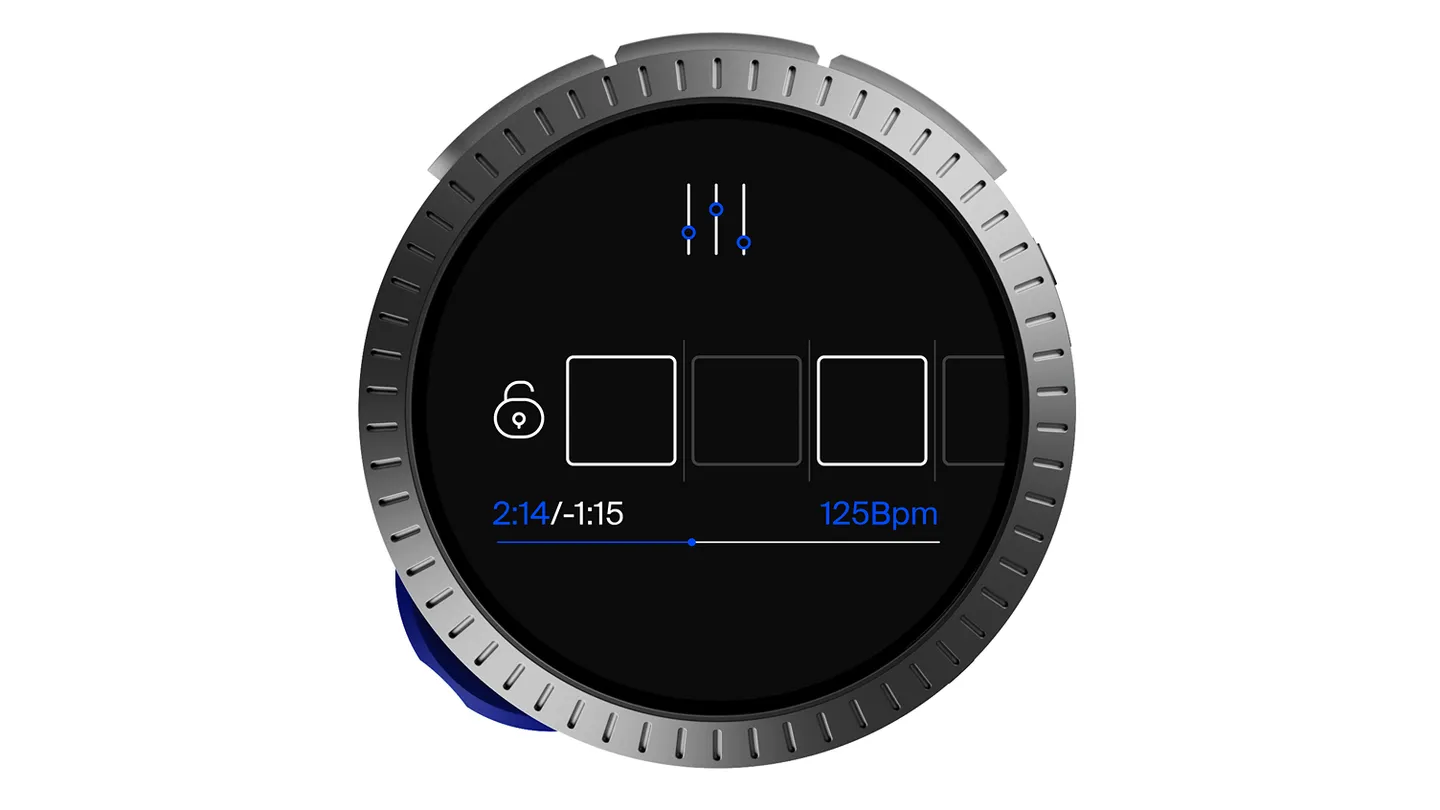
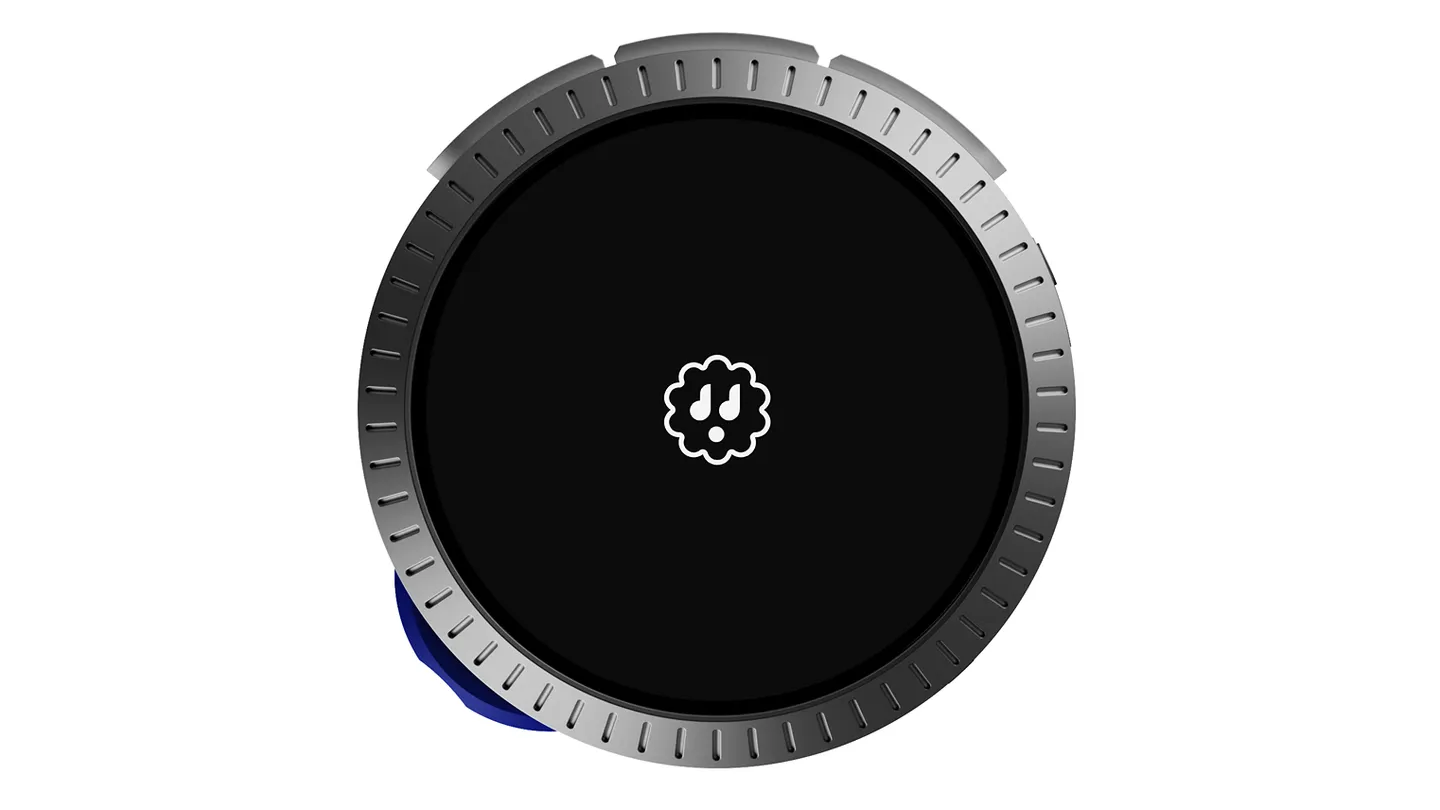
The touch display
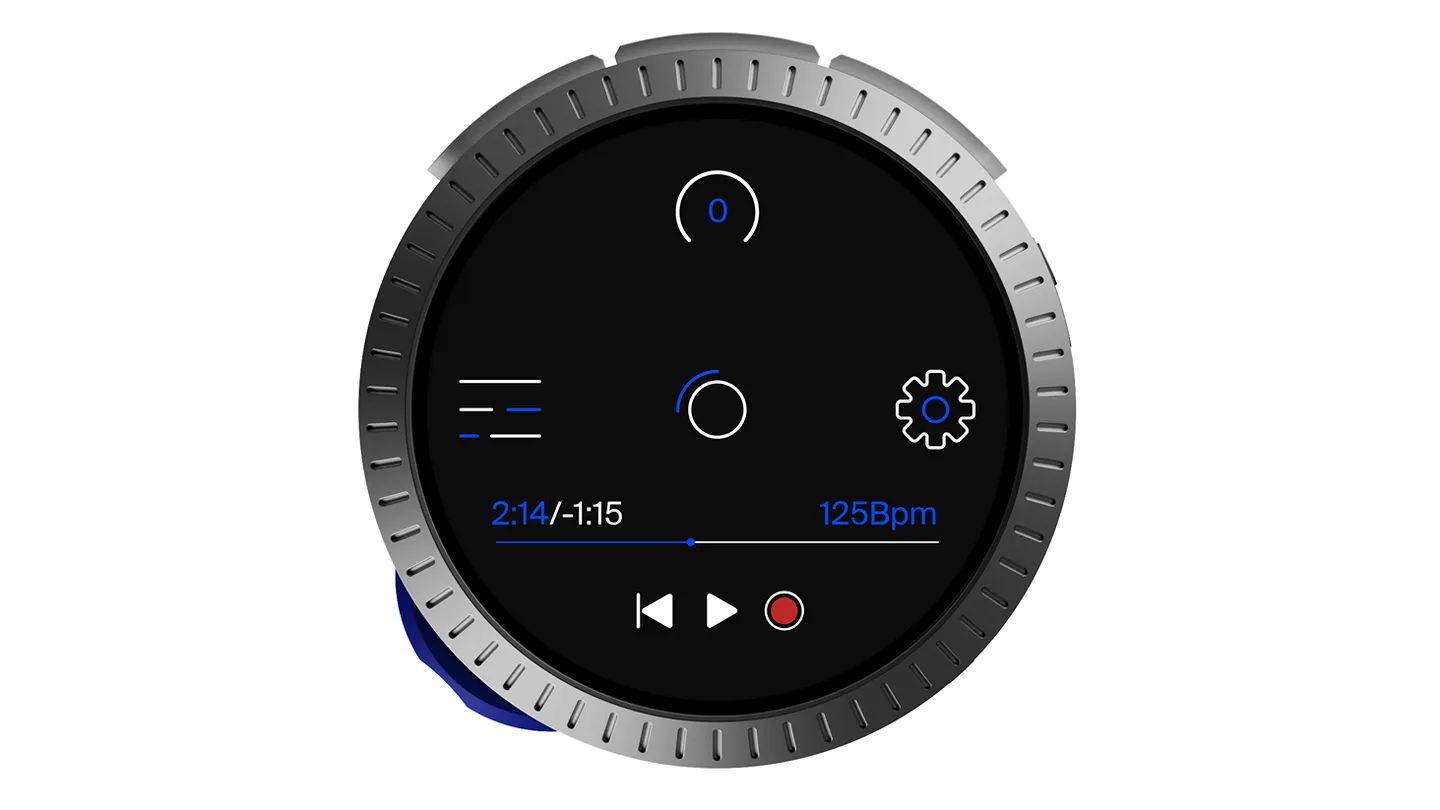
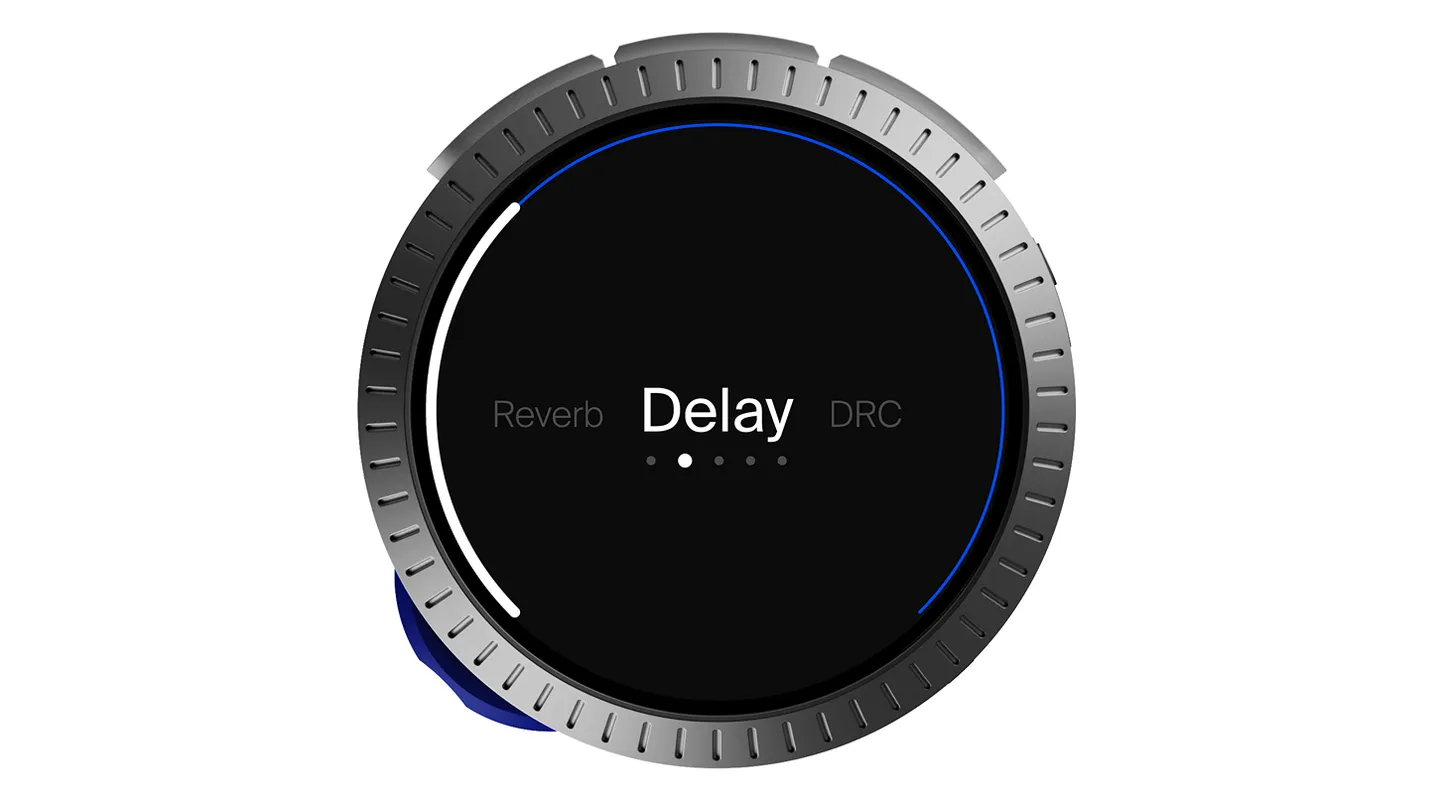
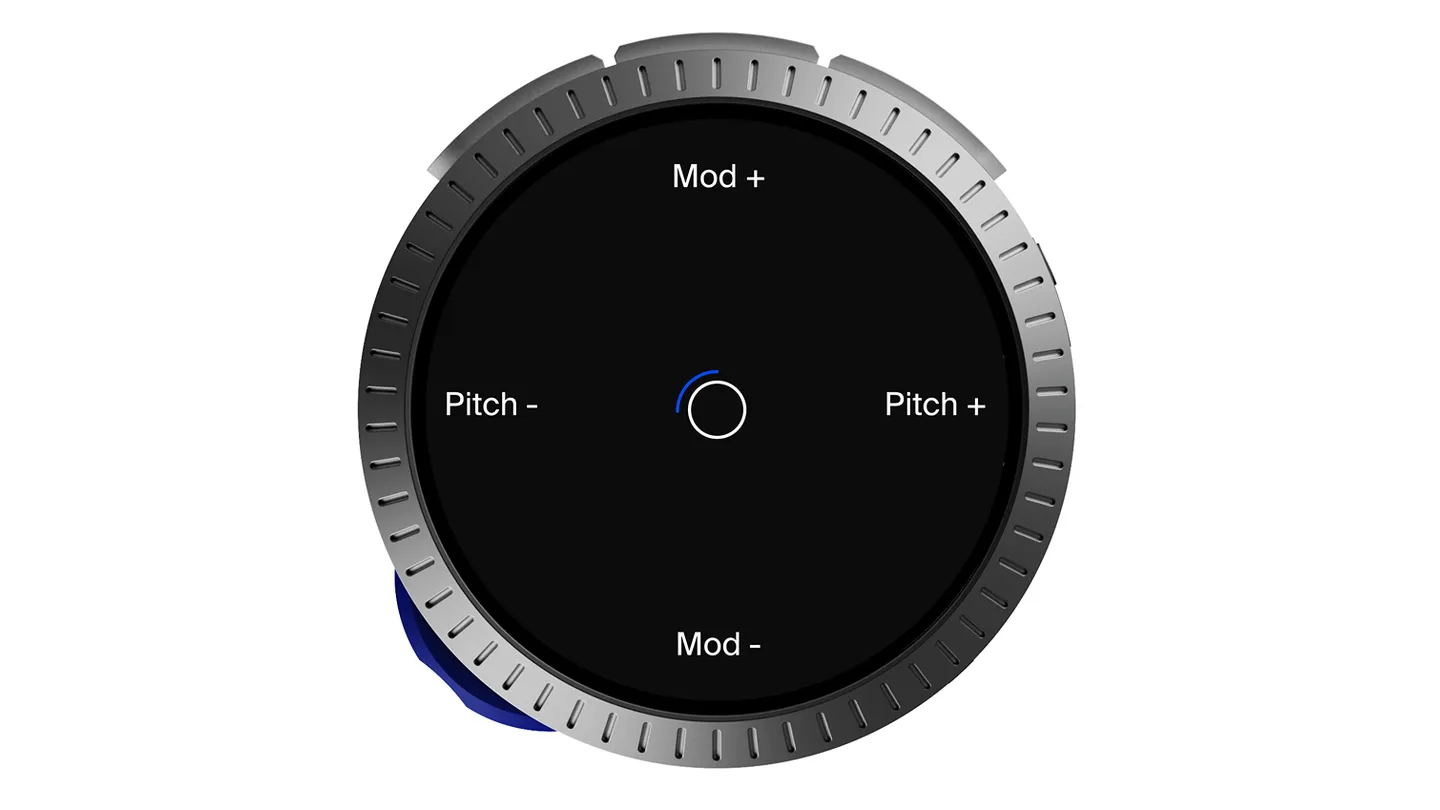
Sounds, effects and the arrangement are prepared here. Playing happens on the keys.
- Home
- Effects
- 3D modulator
- Octave shift
- Arrangement
- Locked
From sketch to object
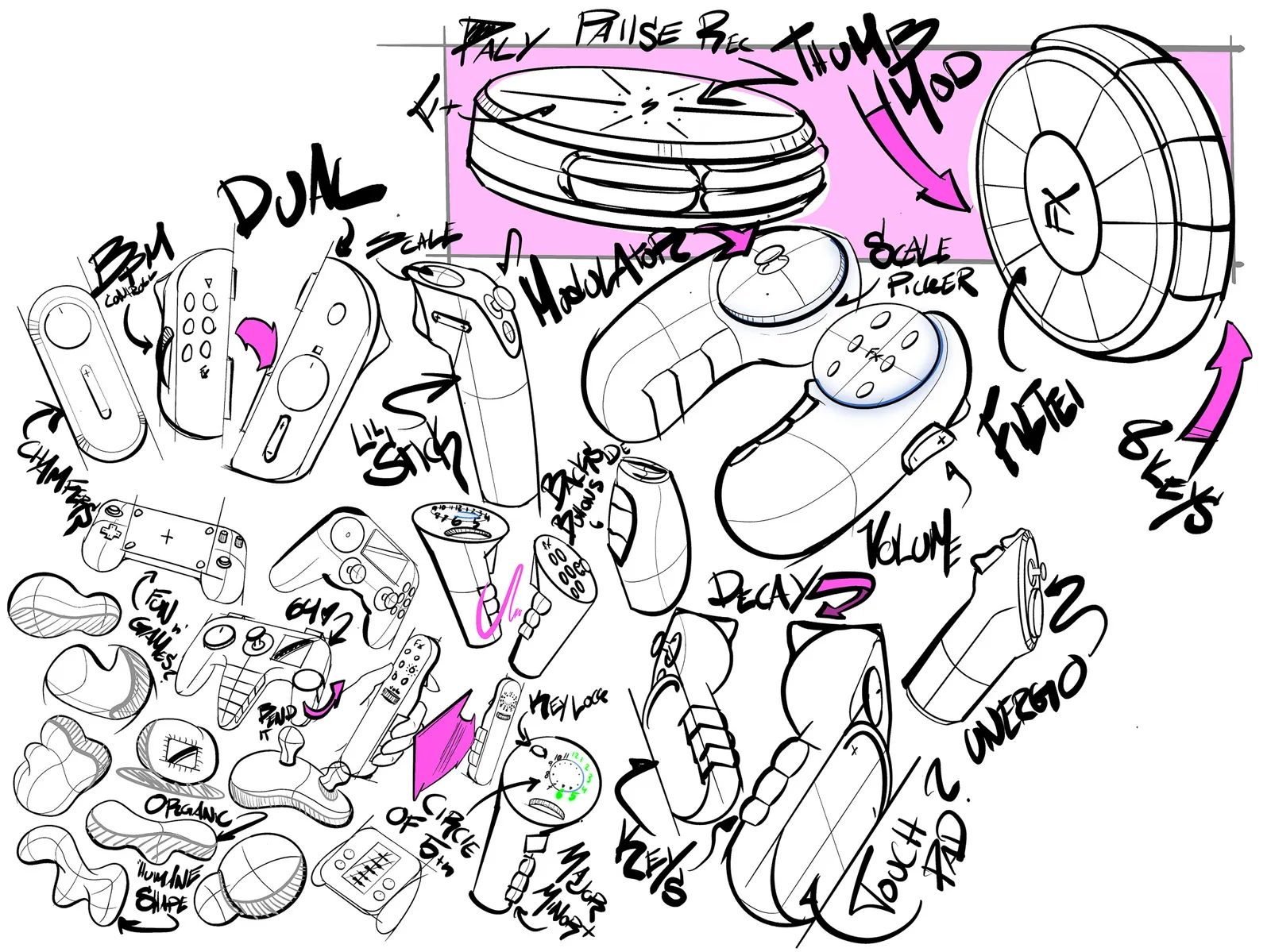
01 Sketches 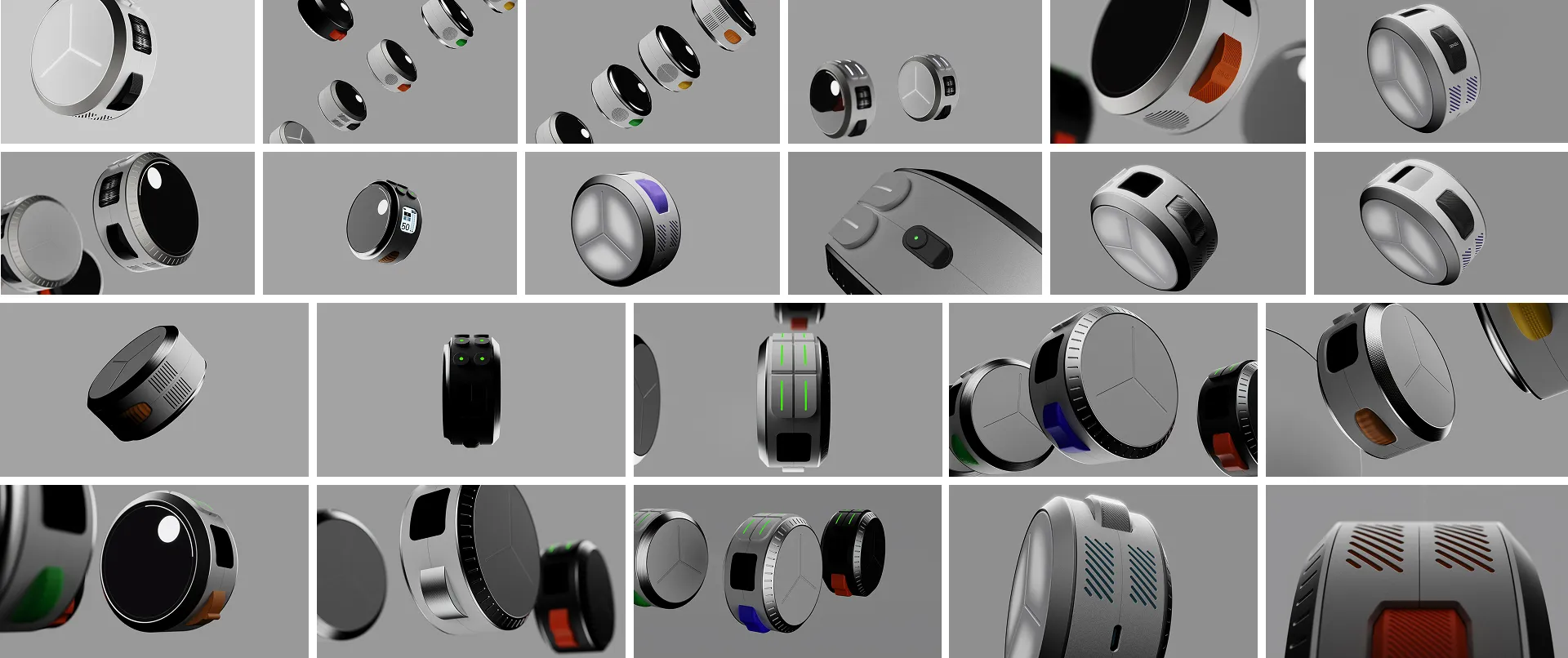
02 Form variants 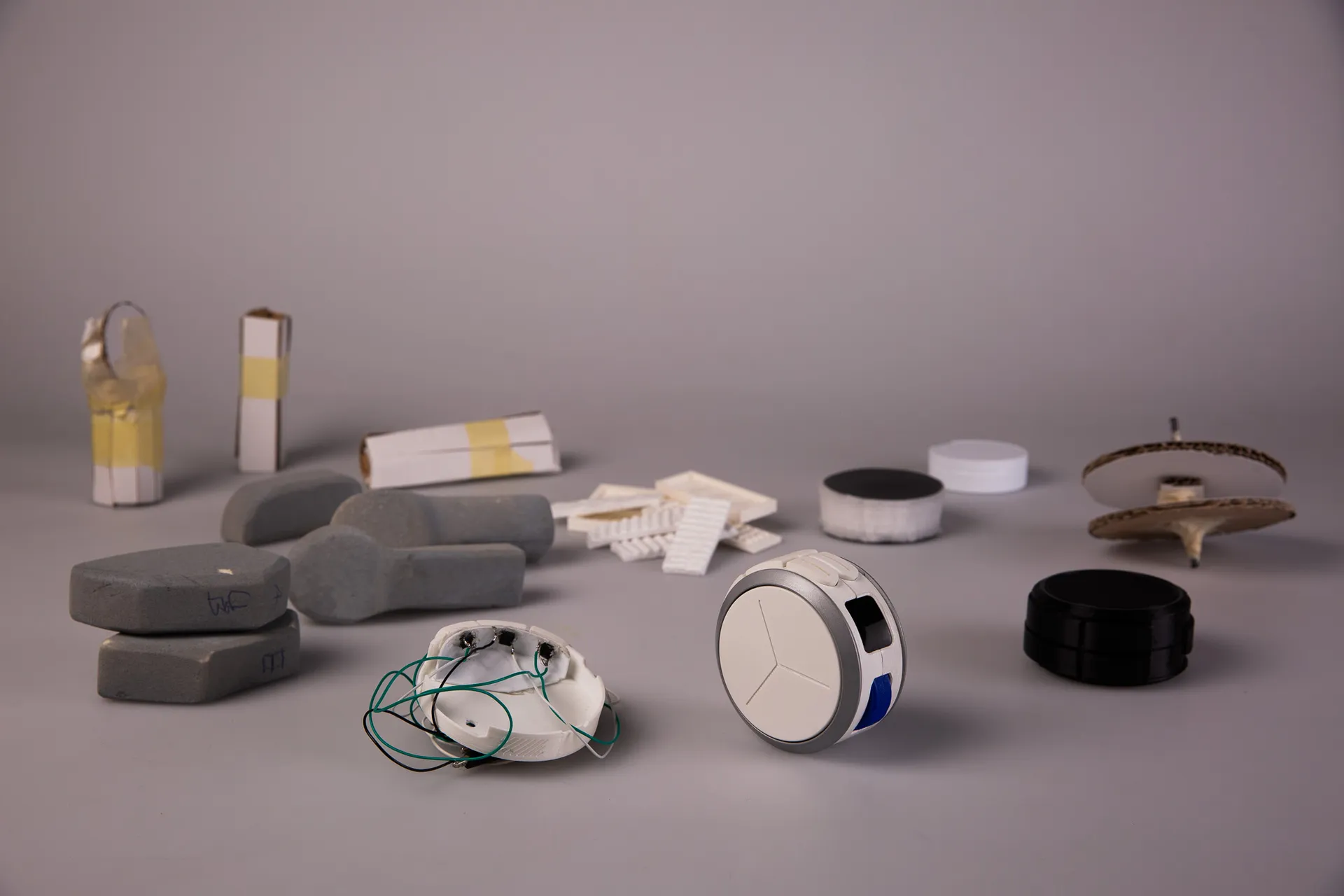
03 Models 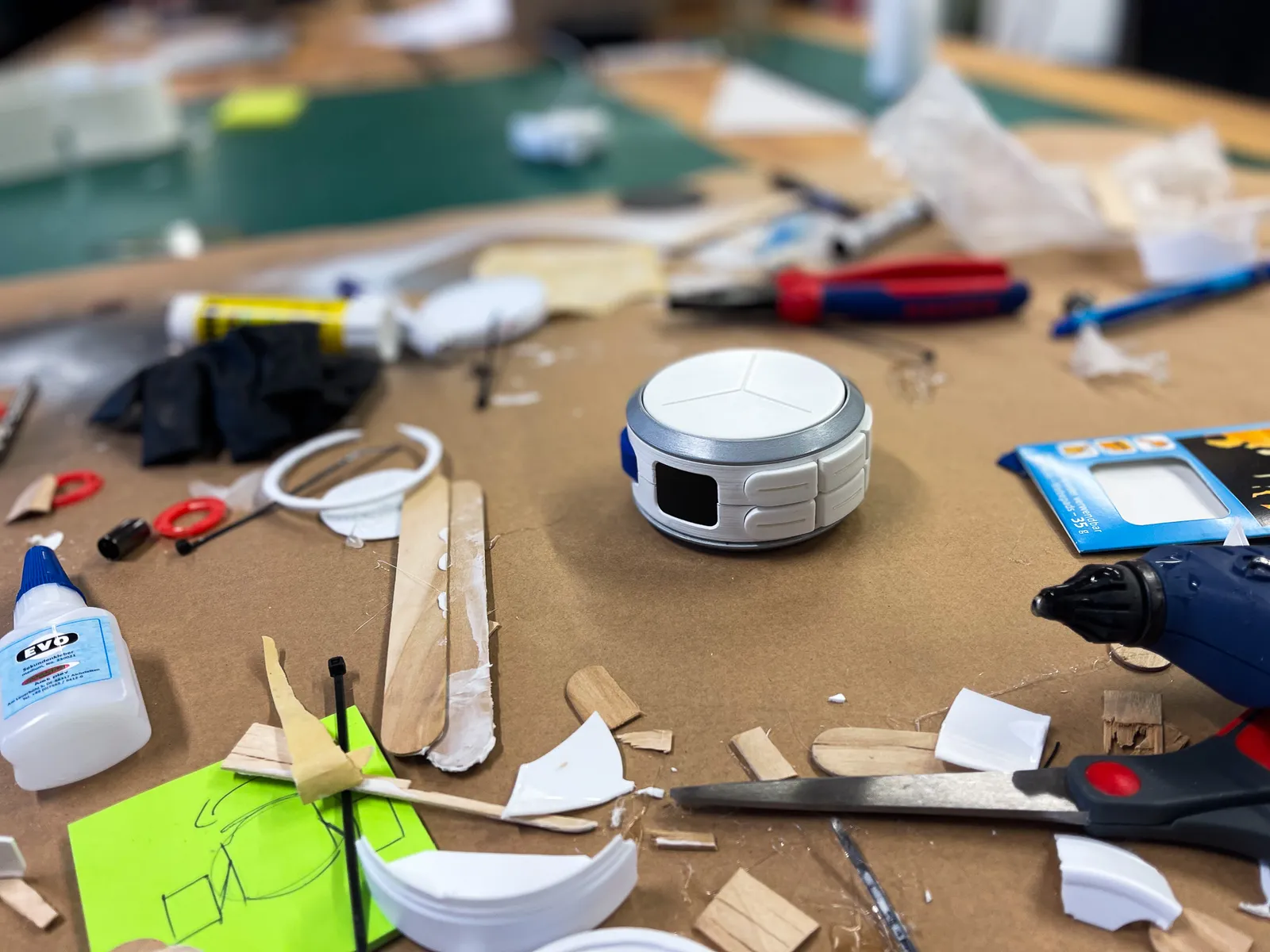
04 Workbench 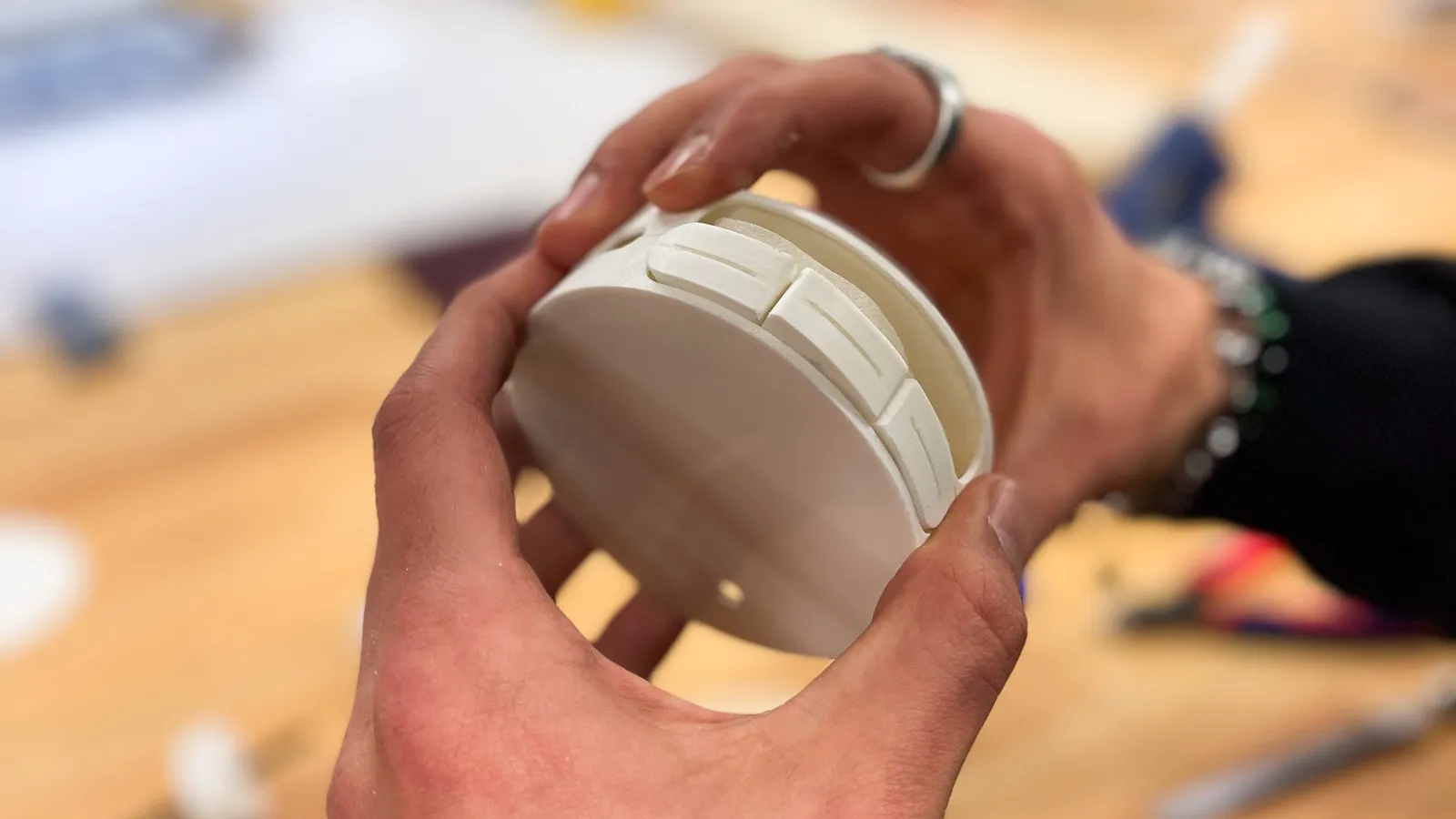
05 In the hand 
06 Paint 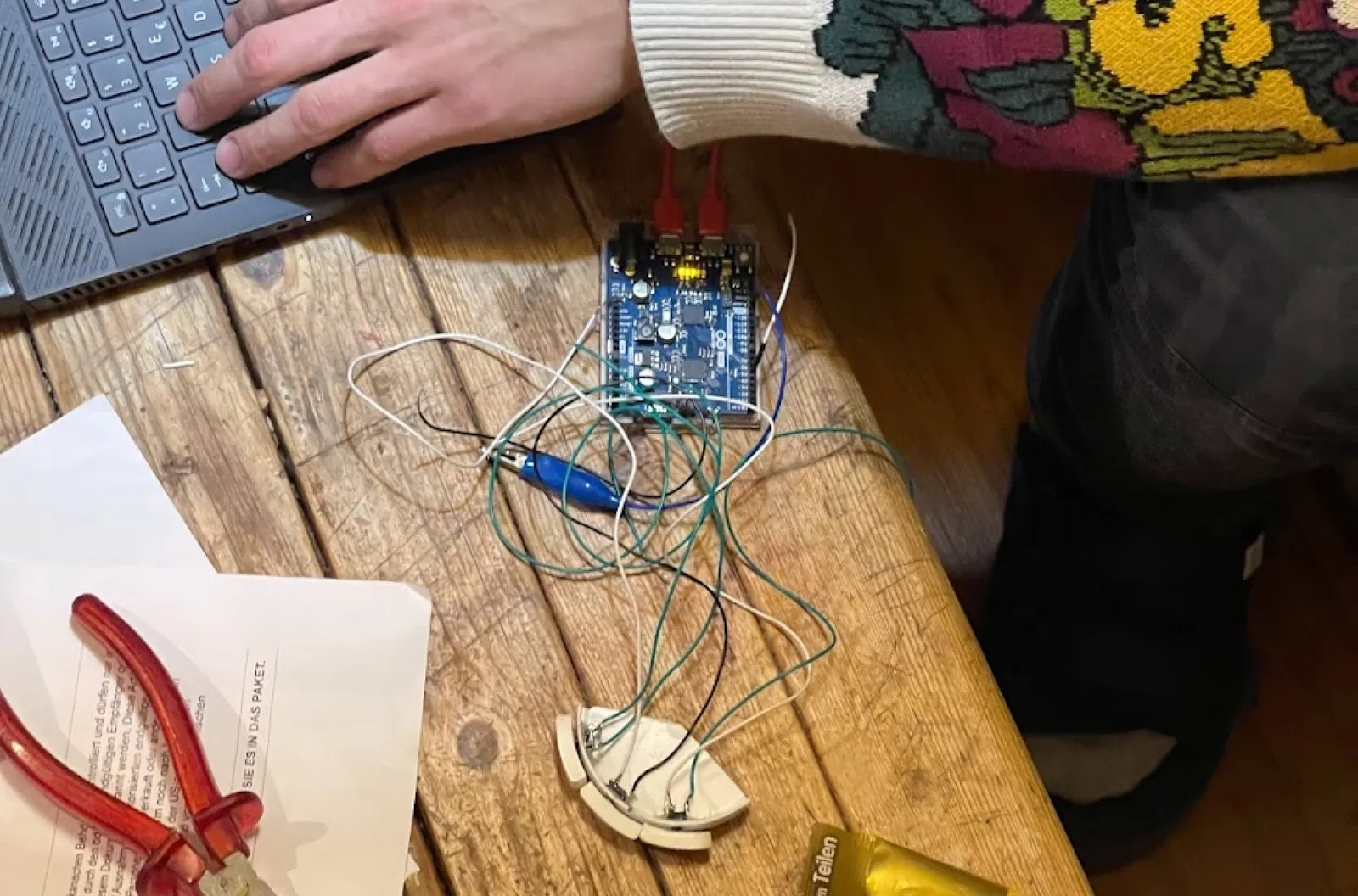
07 Electronics 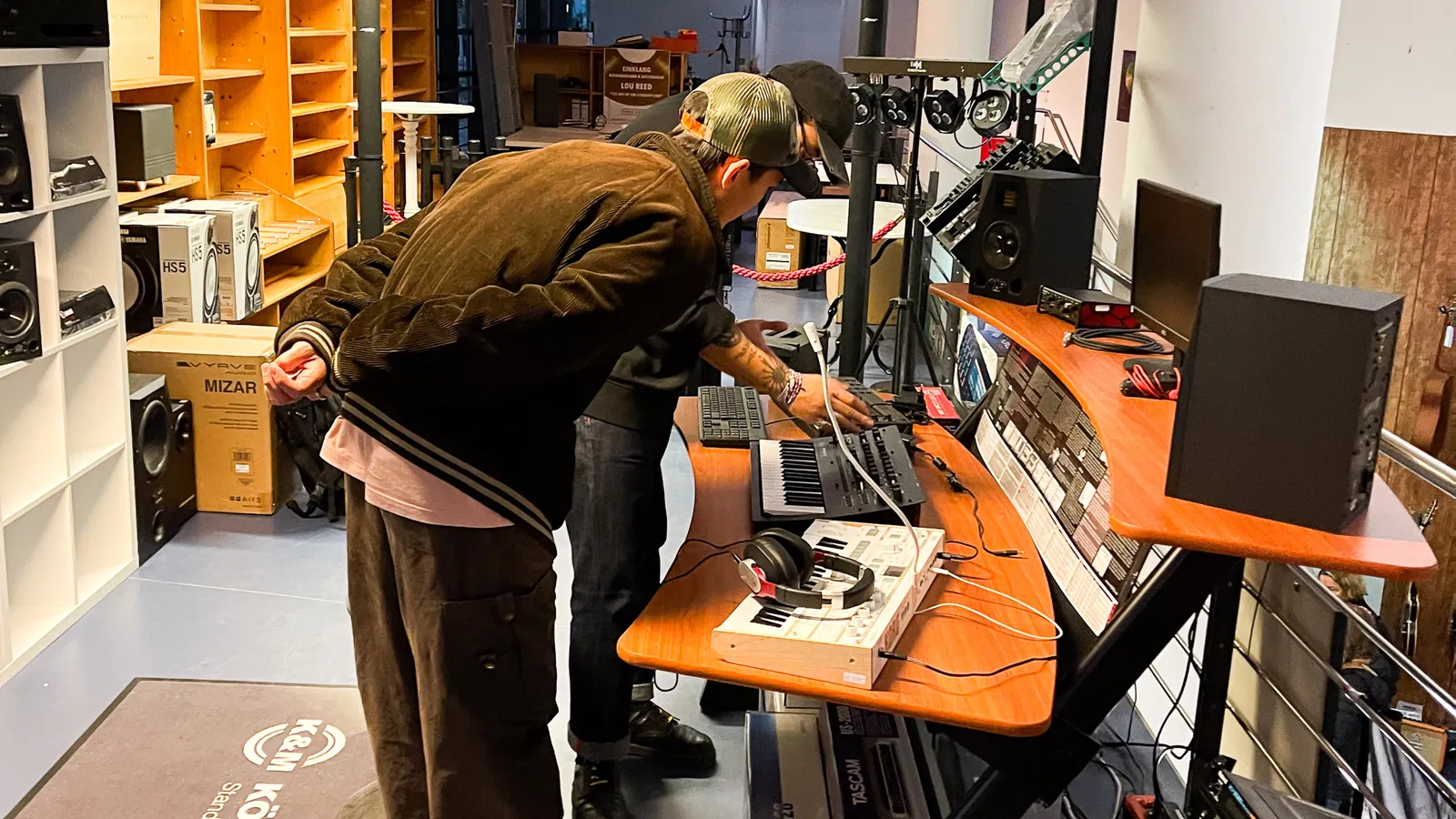
08 Testing
Senzu, the playful MIDI controller.
A working instrument prototype with six playing keys, three drum surfaces and a round touch display, built as a duo. A later refinement of its control logic turns the keys into six chord keys; that refinement is a concept, not built or tested.
Senzu is a standalone instrument with six playing keys, three drum surfaces and a round touch display, compact enough to take along. It is meant to have a place in the room: when you feel like making music, you pick it up, choose a sound and start playing.
About the film above: it starts from our own rendering of Senzu; the camera movement and what moves on the display were generated with an AI video model.
The problem
Our starting point was a musical sketchbook: an instrument for trying out ideas and developing them further, always within reach. It continues my work on touch as a musical gesture in the Midi-Slider project. The question with Senzu was how that becomes a standalone instrument that brings form, sound and control together.
What I built
A working prototype with its own sounds, six playing keys, thumb controls, three drum surfaces, a touch display, sample recording and connection ports. The full original feature set worked in the prototype; that is our own account, not an independent technical review.
Scenes from the process, without sound.
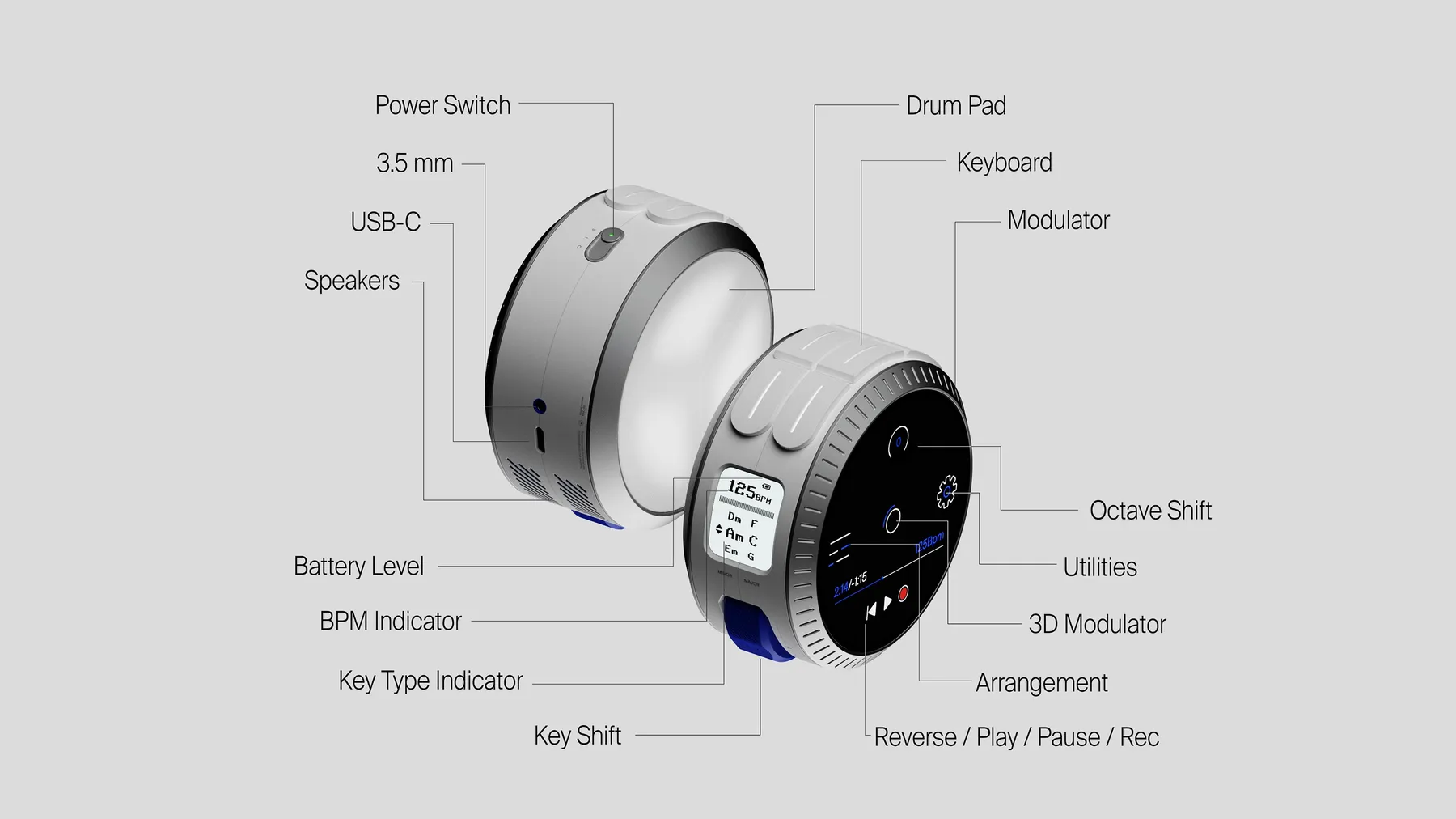 Function map of the design.
Key decisions
01
Two postures, one object.
- Decision
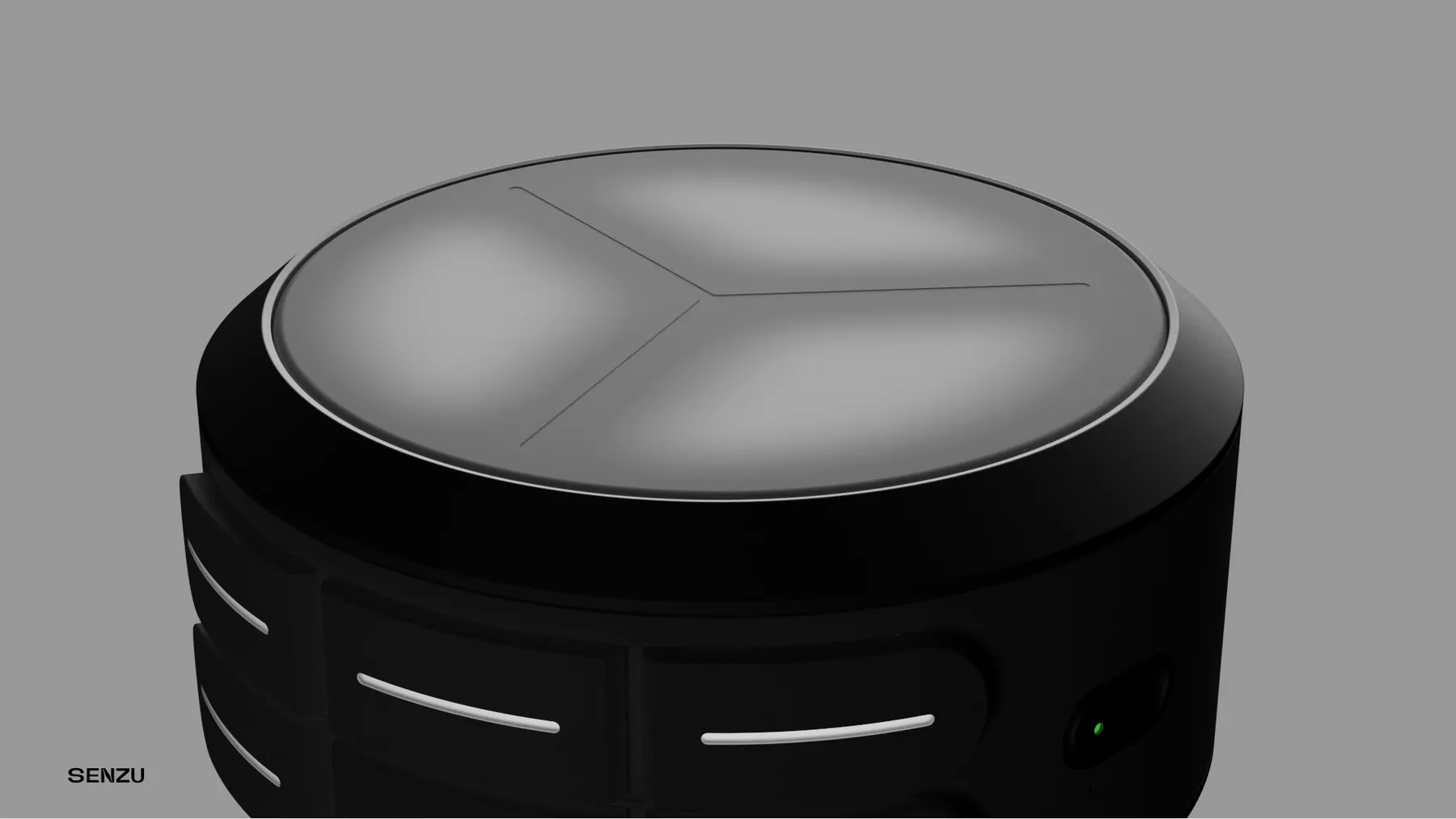
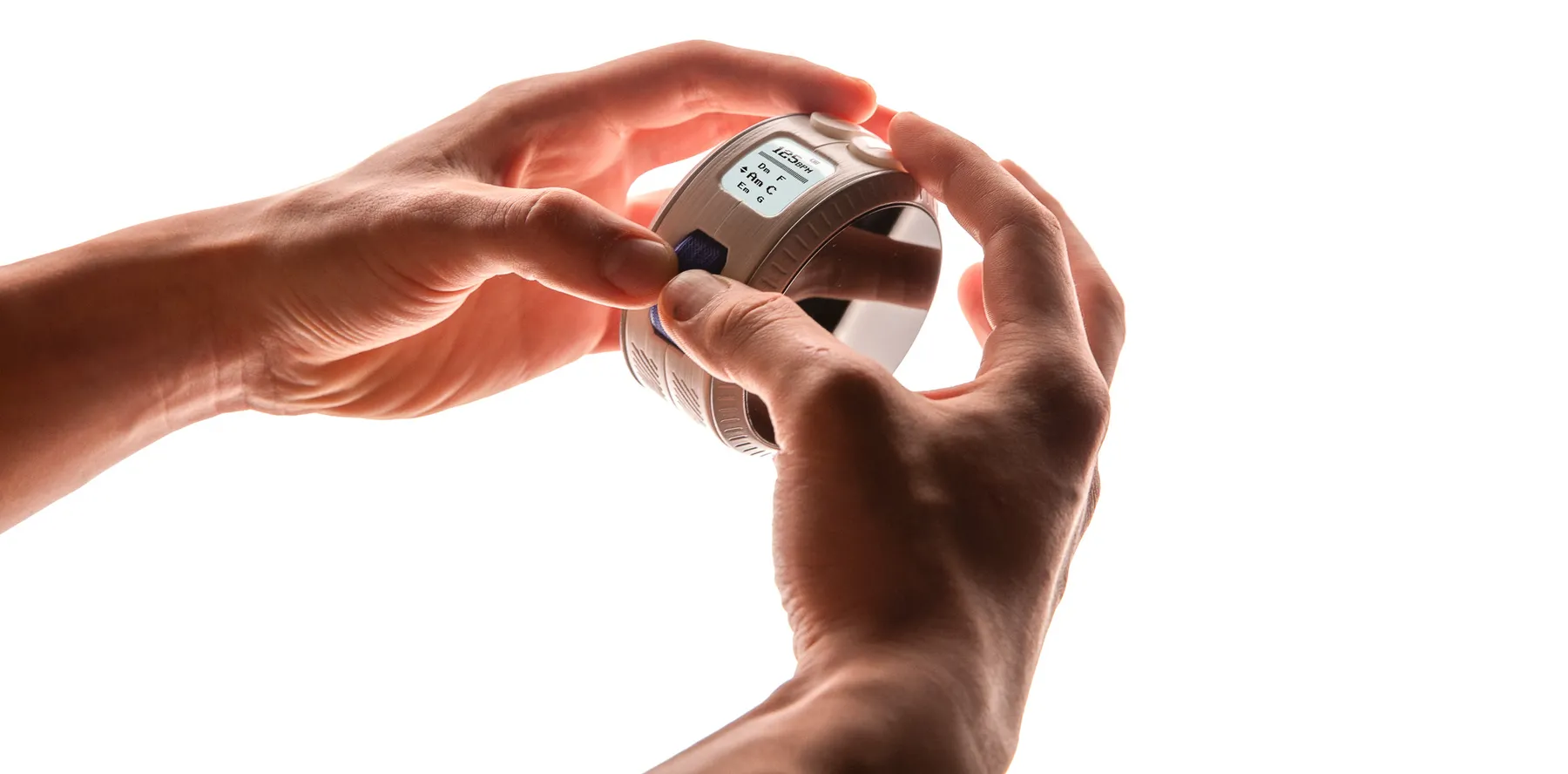
- held in both hands, the index, middle and ring fingers of each hand rest on six keys, and the thumbs reach separate controls to shape the sound. Laid on its side, Senzu offers three surfaces for drumming. A slide switch on the side selects the mode, so switching is a deliberate act: switch, put it down, drum.
- Result
- the same object supports playing with single fingers and drumming on larger surfaces.
02
Prepare on the display, play with your hands.
- Decision
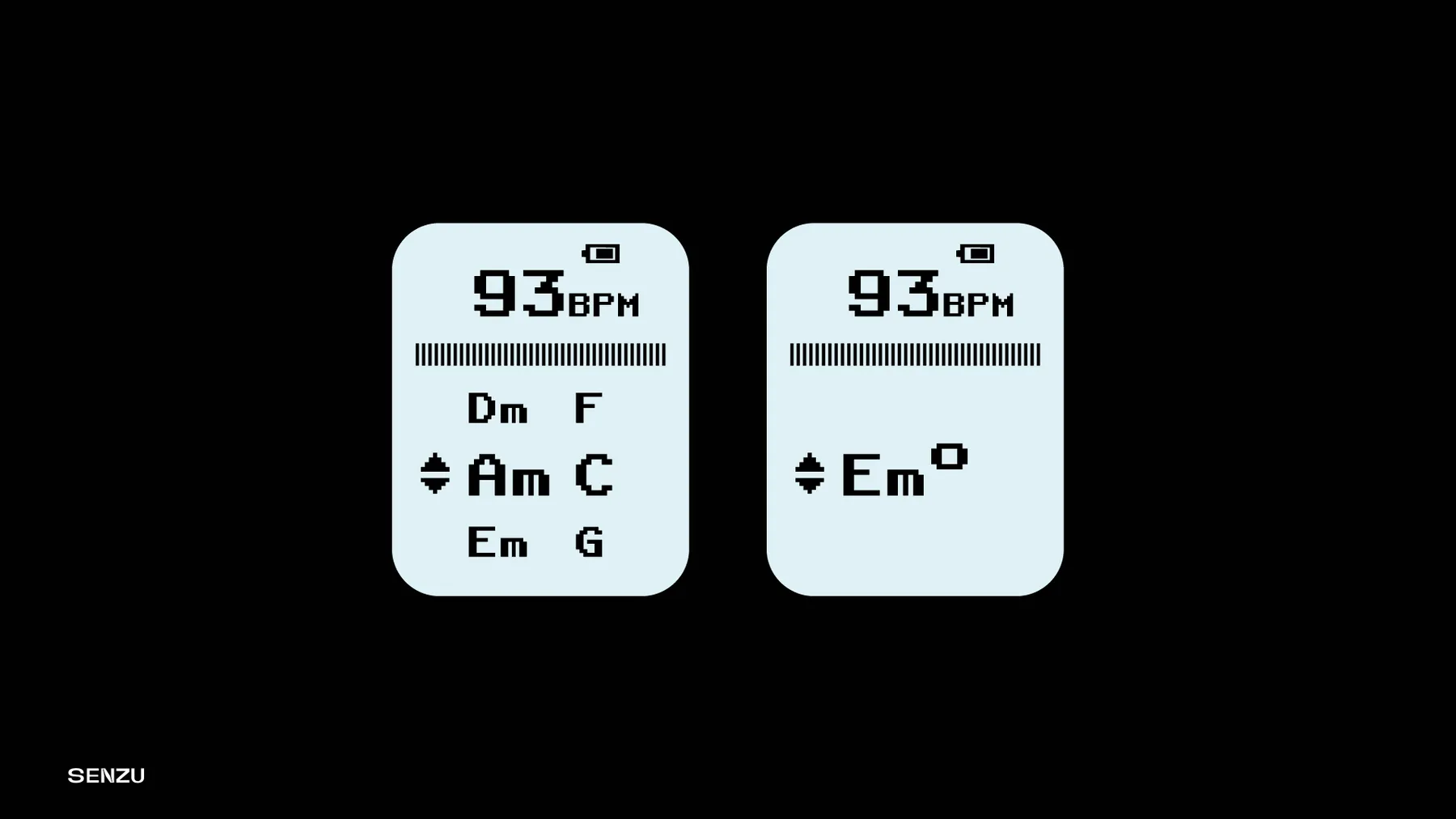
- the round touch display sits opposite the drum surfaces. Sounds and the key assignment are chosen there, alongside recording, playback and arrangement. A small side display shows tempo, battery and musical settings. The display handles selection and editing; the physical controls bring those choices into play. Open question: because display and drum surfaces sit on opposite sides, you have to turn the instrument over to switch. How well that works in a musical flow still needs testing.
03
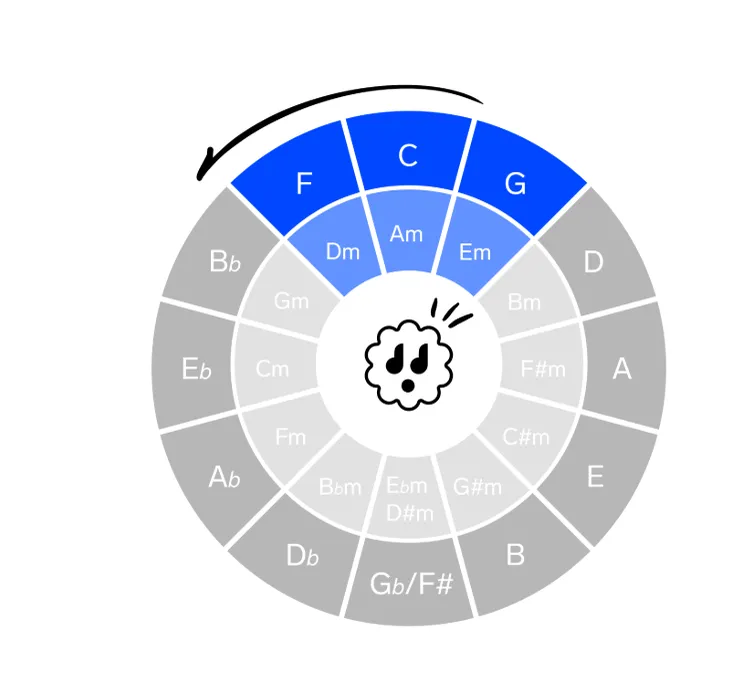
The circle of fifths as a chord palette (original idea).
- Decision
- a marked section of the circle of fifths maps to the six keys, three major and three minor chords. In the example: F, C and G plus Dm, Am and Em. A thumb wheel was meant to rotate that section around the circle.
- Result
- musically coherent, since all six chords belong to C major and give a limited palette of related sounds. But a good progression still comes from playing: order, rhythm and sound. The mapping helps; it does not guarantee a musical result.
04
Form through models.
- Decision
- form studies ran alongside technical prototyping. Variants explored housing shape, control layout and visual details; physical models made size and grip tangible; Arduino was part of the technical exploration.
- Result
- the housing decides which fingers reach which inputs, and the controls shape how the instrument is held.
Refined control logic (2026, concept)
As part of revisiting the project, I sharpened the circle-of-fifths idea into a clearer division of tasks:
- Choose sound and key on the touch display. The harmonic assignment of the six keys follows automatically.
- Play with six chord keys. Each key triggers a full chord. When the key changes, each chord keeps its musical function at the same finger position.
- Shape expression with the thumbs, for example pitch bend. Which mapping works best still needs testing.
- Switch to drum mode for rhythm with the side switch.
The circle of fifths becomes the harmonic basis in the background: you don’t need to operate or memorise it to begin. This version focuses on chord accompaniment and rhythm; free melody would need an extra mapping. It is a current refinement, not something built or tested at the time.
Outcome
- A working instrument prototype that combines product design and interface design in one playable object.
- A refined control logic that gives the six keys an understandable route to chords while the hands stay free for expression.
The working original prototype and the value of the refined logic are separate claims. There is no documented user study of either version.